Why Brand Strategy Matters More as Companies Scale
When we say brand strategy, we don’t mean a logo refresh or a new website. We mean the clarity behind how your company shows up everywhere it matters. Brand strategy is the set of decisions around who you’re for, what you stand for, and how that story comes through in your product, your website, your sales conversations, your marketing, and even how your team talks about the business.
Strong brand strategy shows up in execution, not just documents, and it’s what makes everything feel aligned instead of fragmented as you grow.
Why It Matters for Growth-Stage Companies
At the growth stage, brand goes far beyond a logo or visual refresh and becomes the connective tissue between product, marketing, sales, and culture.
Your brand is how your company answers the unspoken question every prospect, partner, and hire is asking: why should I care about this brand now?
Clarity accelerates growth by keeping teams aligned around a shared story as channels multiply and organizations expand. A clear brand reduces friction, speeds up decision-making, and helps teams move in the same direction without constant recalibration.
At the same time, brand builds trust at scale. When you’re scaling your communications across multiple channels, consistency matters, and a confident brand helps customers trust you before they ever interact with you directly.
Brand also supports valuation and perception as companies mature. A strong brand presence and voice signals focus, leadership, and credibility, not just a solid product, and consistent, genuine expression builds confidence with investors, partners, and customers alike.
Product-Market Fit vs. Brand-Market Fit at Scale
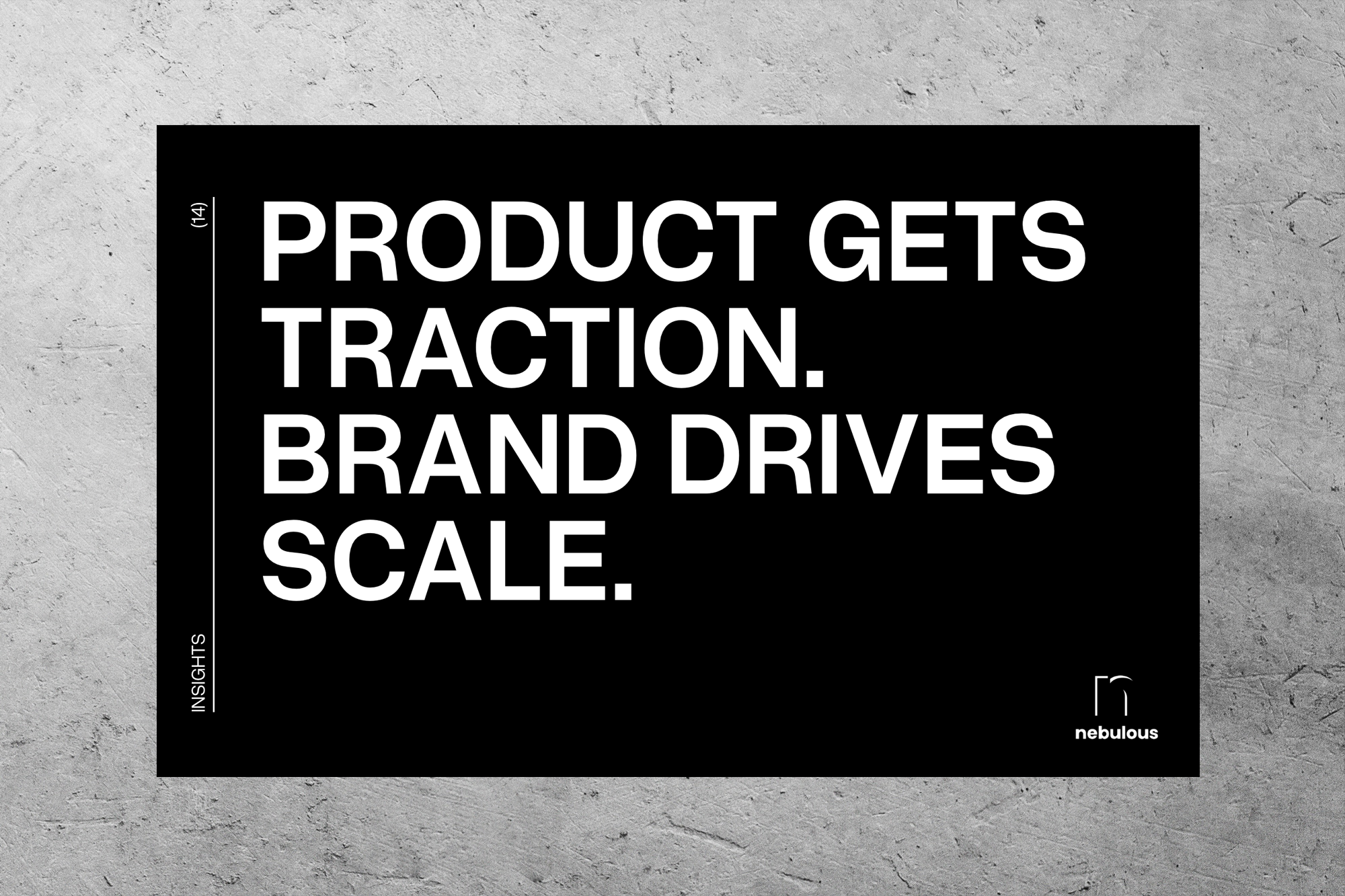
Product-market fit gets you off the ground, but brand-market fit keeps you moving once you’re airborne.
At the growth stage, many companies hit a plateau not because the product isn’t working, but because the brand hasn’t kept pace with the business. Messaging becomes fragmented, the story starts to feel dated, and teams begin interpreting the brand differently. They loose the compass that helped guide the brand initially from a product focused perspective.
Product-market fit tells the market your product works, while brand-market fit tells the market your company is worth betting on.
The difference often shows up in sales cycles, retention, referrals, and hiring, because brand is what turns early momentum into long-term durability.
The Strategic Advantage of Brand Thinking During Growth
When growth-stage teams invest in brand strategy, several advantages emerge.
Brand clarity creates stronger internal alignment by giving leadership and teams a shared language for decision-making, which becomes increasingly important as organizations scale.
It also enables more consistent go-to-market execution, keeping messaging tight, recognizable, and coherent across websites, sales decks, campaigns, and every customer touchpoint.
Over time, this consistency leads to higher perceived value, as brands with clear positioning and confident expression are easier to trust, easier to remember, and easier to choose in crowded markets.
Final Thought
If you’re scaling a company you believe in, brand shouldn’t sit at the bottom of the priority list. At this stage, it’s not decoration, it’s direction. When brand strategy and creative expression are aligned, growth-stage companies move with more confidence, communicate with more clarity, and build stronger relationships with the people who matter most.